ServiceNow ITOM: Discovery and Service Mapping made simple
Understand how infrastructure discovery and service dependency maps help investigate outages.
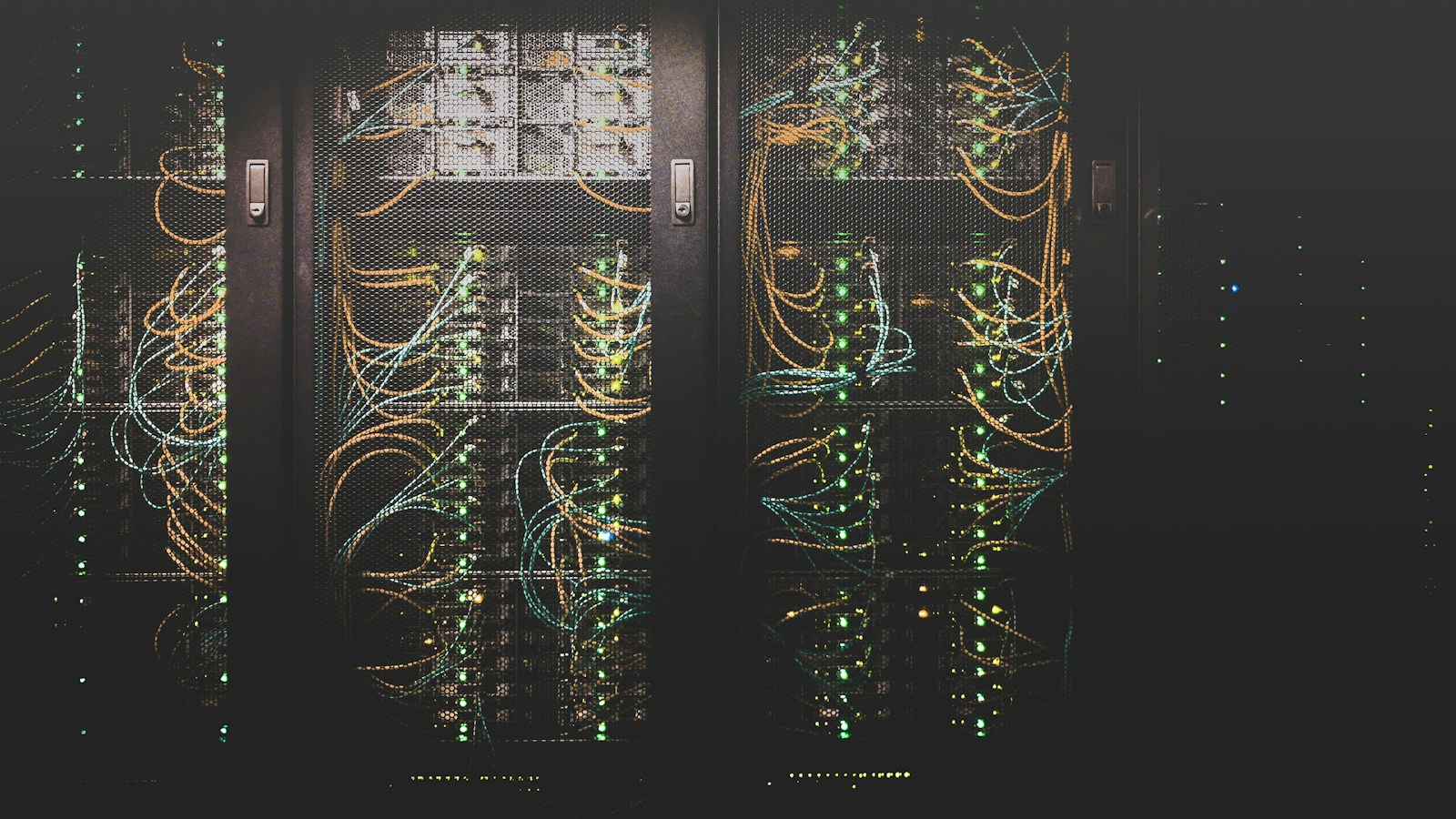
Server infrastructure illustrating IT operations and discovery.
Understand the difference between ITSM and ITOM
ITSM structures the provision of services and the processing of requests; ITOM provides operational visibility into the components that support them. The two meet when an incident must be linked to an infrastructure and a business service. A list of servers is not enough to explain why customers can no longer book. You need to know the applications, dependencies and responsible people. The goal of Discovery and Service Mapping is to provide some of this context, with data reliable enough to help teams decide.
Set the perimeter before launching Discovery
Inventory authorized environments, network ranges, cloud accounts, and component types you are looking for. Identify owners and operating constraints. A scope that is too large can generate results that are difficult to verify and place unnecessary demands on sensitive equipment. Start with a representative environment, with a list of expected items to compare results to. Check the prerequisites of the technologies concerned and the functionalities subscribed to. Discovery depends on appropriate configurations and access: it does not automatically discover any device just because it is on the network.
The role of the MID Server in the affected environments
A MID Server is a component installed in an environment that has the necessary access to communicate with the targeted resources and the ServiceNow instance. Depending on the scenario, it helps collect information through supported protocols and APIs. Its placement, availability and permissions must be studied. Avoid granting it unlimited rights for convenience. Document authorized network flows and credential management. Cloud architectures may use different collection mechanisms; it is necessary to choose the appropriate scheme rather than systematically reproducing a single installation.
Identify, recognize and collect information
Discovery seeks to determine what a resource is and what information can be collected. The available mechanisms vary depending on the technology and patterns used. A partial result may come from access denied, an unavailable protocol or an unrecognized application. These situations must be distinguished from a truly absent resource. Keep collection errors and process them by category. Inventory quality improves when the team corrects prerequisites and verifies the results with managers, not when they simply increase the frequency of scans.
Populate the CMDB without multiplying duplicates
The information discovered must integrate with other sources in the CMDB. Define identifiers, matching rules, and attribute update responsibilities. The same server can be described by Discovery, a cloud tool and inventory import. Without governance, these sources can create multiple records or overwrite useful values. Identification and reconciliation mechanisms are therefore as important as collection. Check for duplicates, missing values, and out-of-date resources, taking into account that not all sources are refreshed at the same time.
Moving from resource to service with Service Mapping
A service map connects technical components to an application service. For a reservation portal, we can find a web entry point, an application, a database and external exchanges. The map should show diagnostically useful dependencies, not just produce an impressive drawing. Depending on the capabilities and configuration available, several relationship discovery approaches can be used. The service manager should check the found components and missing dependencies. An automatically generated map remains an operational hypothesis until its fidelity has been checked.
Example: analyze the impact of an unavailable database
An alert indicates that a database is no longer responding. The inventory allows you to find its owner and its environment; mapping helps identify applications that depend on it. Support can then link symptoms reported by different users to the same component. This context improves coordination, but does not alone prove the cause of the failure. Availability, metrics and recent changes still need to be looked at. A mapped dependency describes a relationship; it does not replace the steps necessary to confirm that it explains the incident at hand.
Design a secure and maintainable operation
Organize credential rotation, network change validations, and collector monitoring. Protect technical accounts and avoid storing their secrets in uncontrolled documents or scripts. Define discovery windows and what to do when a collection fails multiple times. Document the responsibility of the platform, network and application teams. Updates must be tested on a controlled scope. Operational visibility becomes fragile if it depends on a single personal account, an unsupervised server or a configuration that no one knows how to reproduce.
Measure card coverage and freshness
Compare expected resources to recognized resources, then evaluate the completeness of important attributes and relationships. High coverage on unimportant equipment does not compensate for the lack of a critical base. Also measure the age of the last successful collection and the error correction time. Check maps after major application changes. The good indicator is the ability of teams to quickly find the components and people responsible for a real service. The total number of CIs discovered is only a measure of volume, not a proof of quality.
Build a roadmap by service
Choose a few priority services, define their owners and validate the prerequisites. Set up the discovery, correct the errors then verify the mapping with the teams concerned. Then integrate this information into incident and change journeys. Tuplify Studio can support the framing of integrations, data processing and automation around ServiceNow. Exact capabilities depend on your instance and subscriptions. A phased deployment provides verifiable results and a repeatable method before expanding coverage across the entire infrastructure.
Workshop: validate a discovery on a known perimeter
Choose a few resources that the team knows about, owners, and dependencies. Prepare an expected list, authorize access then launch the collection within the agreed scope. Compare each result: absent, partially recognized, correctly identified or duplicated. For a missing resource, check network, credentials, and discovery capability separately. Then link the elements to the department studied and ask its manager to check the map. Edit a component in a test environment and observe the update. This workshop measures the fidelity and freshness of the process, whereas a simple count of thousands of resources does not show whether critical data is usable.
Frequently asked questions: automation and the cause of incidents
Is mapping always automatic? Available capacities and approaches vary; preparation, configuration and validation are still necessary. Exceptions and unrecognized technologies must be addressed explicitly.
Does an addiction prove the cause of an incident? No. It indicates a possible path of impact, to be compared with real measurements and events.
Should you discover all the infrastructure from the start? A progressive scope reduces errors and allows learning. Start with priority services, with managers who can validate the results. Coverage can then be expanded based on an already proven collection, reconciliation and correction method.
What we can build for you
We help scope ITOM integrations, Discovery setup and service-dependency workflows for your infrastructure.
Let’s discuss your projectGo further · official documentation
ServiceNow — DiscoveryTuplify Studio · Educational guides created with AI assistance. Examples are illustrative.